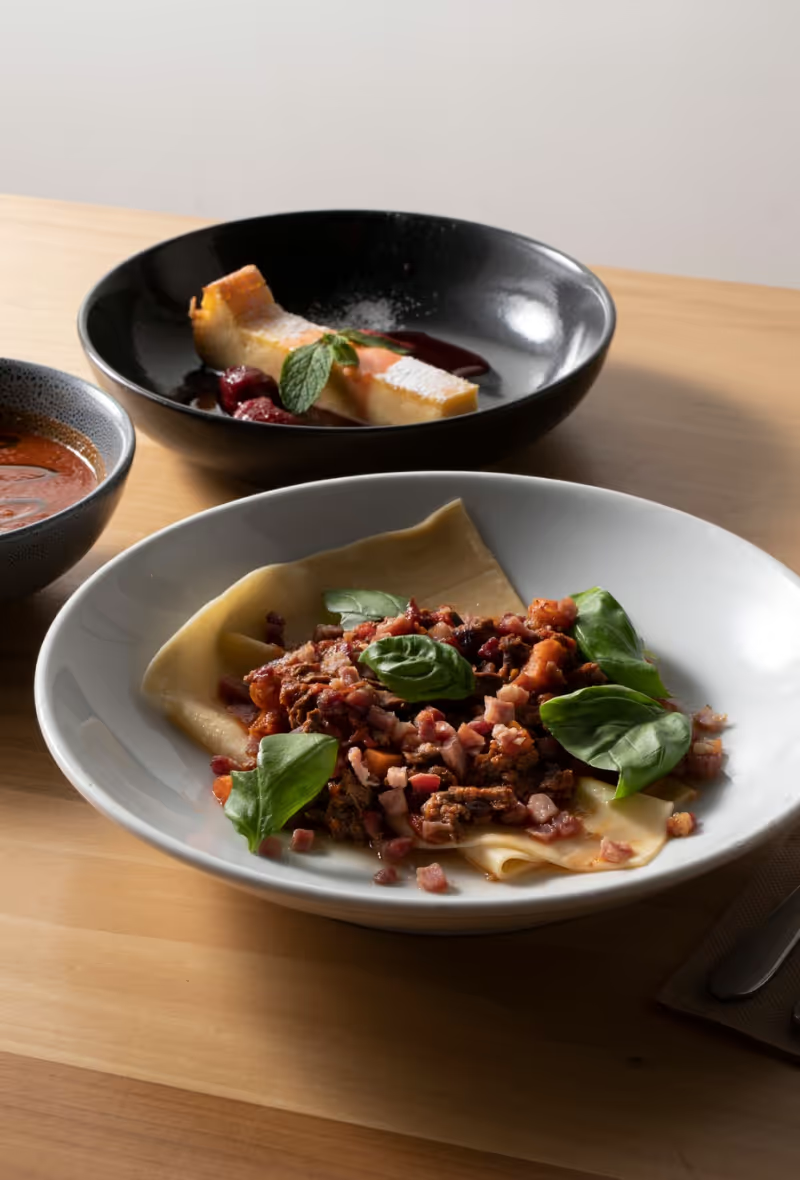
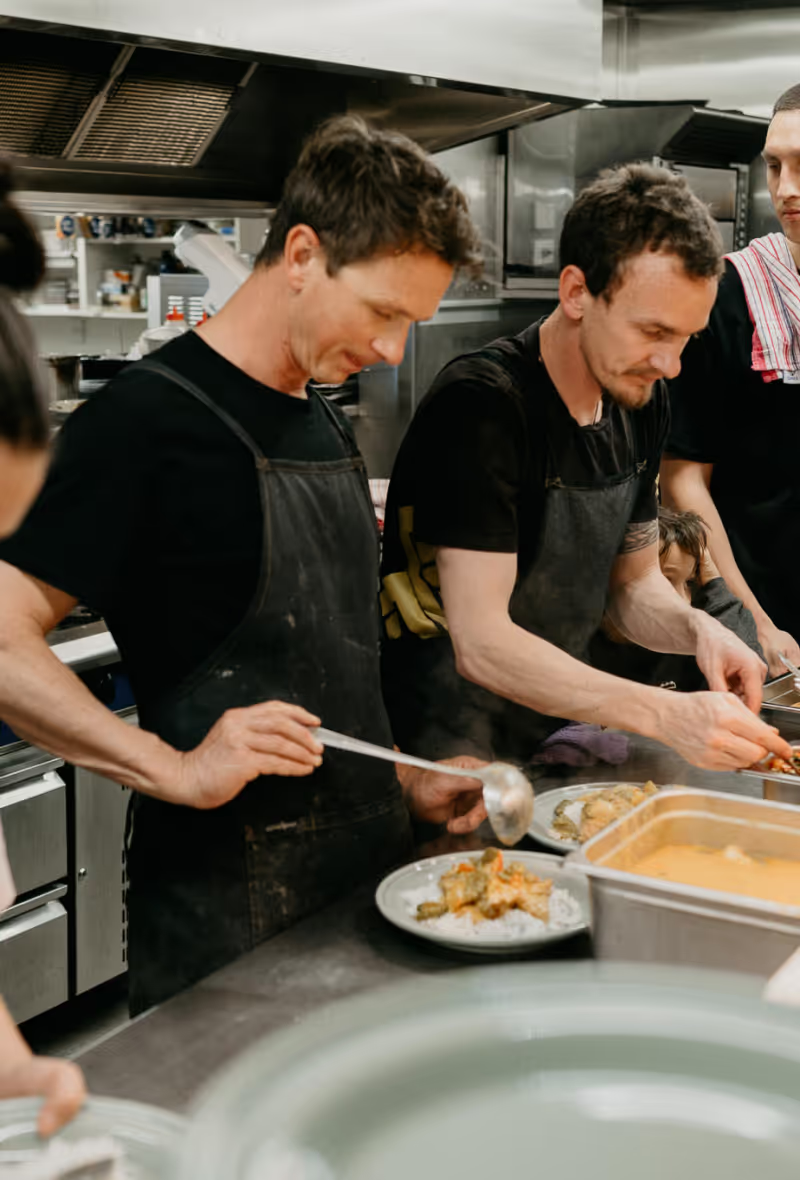
Meet Nicole Gaston of Nice Assets, the potter behind Clay-It-Forward, and discover how reclaimed clay and surplus food come together at the Everybody Eats table.
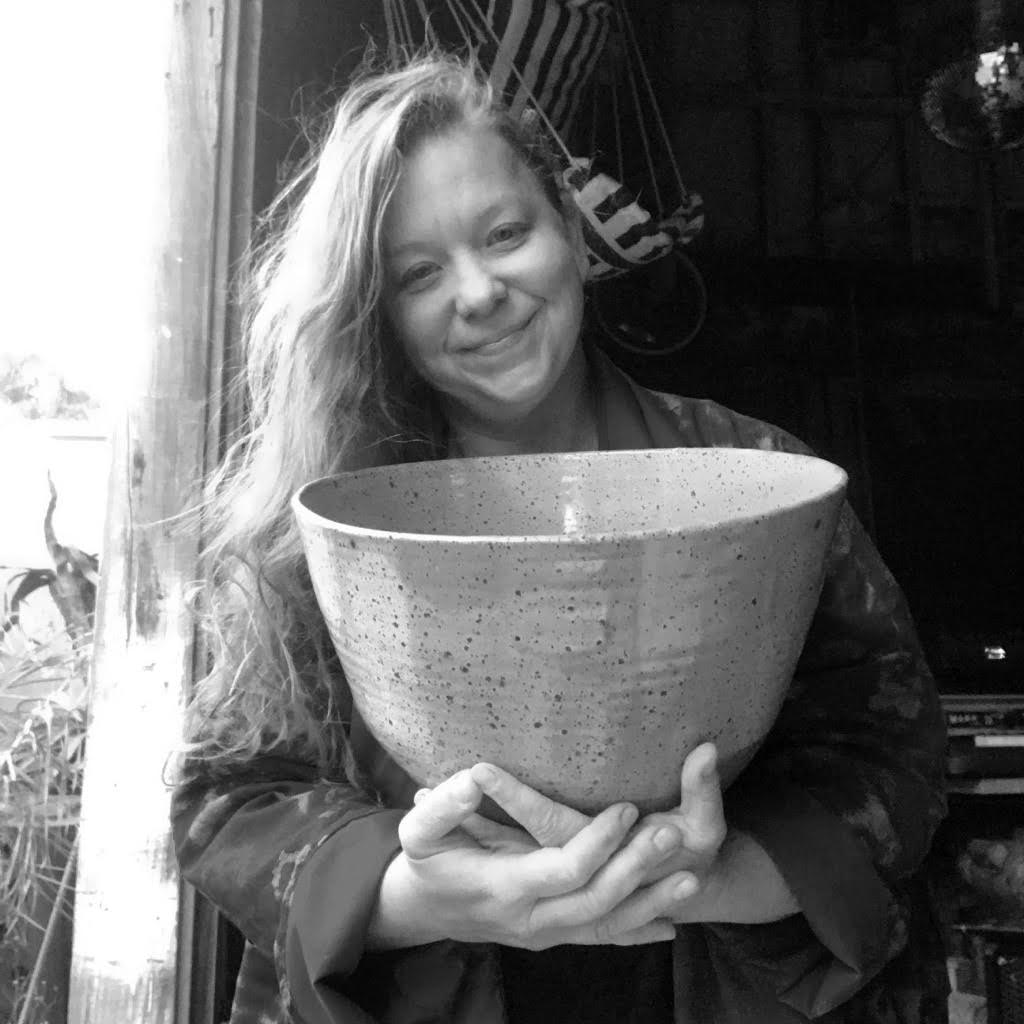
Clay-It-Forward brings together surplus food, handmade ceramics, and shared tables in support of Everybody Eats. We spoke with Nicole Gaston of Nice Assets about reclaiming materials, slowing down, and why what we eat from matters.
How does making plates for this event align with your practice?
Sustainability and mindfulness are the kaupapa behind how I work. That’s why I’ve been an Everybody Eats fangirl for so long. Their model rescues surplus food and turns it into community meals in a country where households still waste about $3 billion of food each year—around $1,364 per household, nearly six weeks of groceries thrown out annually.
My studio practice is a small form of activism: local materials, slow processes, reclaiming clay and glaze. It’s a conscious decision not to feed profit‑driven systems that exploit workers and the environment—issues that are well‑documented.By contrast, Everybody Eats’ pay‑what‑you‑can approach resonates with my values of accessibility, redistributing resources and removing barriers to dignity.
Why do handmade objects matter in shared dining?
A handmade plate carries a story. A mass‑produced plate carries… a barcode.
I use 100% NZ stoneware clay, and I genuinely believe it changes the experience of a meal. My own cupboard is huge and mismatched, and choosing the right mug or plate for a guest always sparks conversation—how it was made, by whom, where the clay came from, what it means.
And it’s not just the vibe. Mass‑market tableware depends on industrial kilns and long shipping routes that multiply the footprint of an already energy‑intensive product.Handmade is traceable and relational—rooted in place and people—rather than outsourced to anonymous factories and freight.
Also, the context matters: over 500,000 people a month now rely on food hubs in Aotearoa. A plate that slows you down and makes you talk to the person next to you feels like a tiny act of resistance and care.
What excites you about your work being used by diverse diners?
Accessibility is everything. Everyone deserves good food and beautiful experiences—not just people who can afford “nice things.” Everybody Eats’ pay‑what‑you‑can model brings people from different backgrounds together at the same table, dissolving the usual class lines of dining. Research on their model shows it actively builds diverse social capital, which is rare in conventional food‑aid settings.
That’s the opposite of the mass‑market model, which externalises environmental and labour costs out of sight. Here, the costs and the care are visible—and shared.
Do people interact differently with handmade ceramics?
Generally I would say most people instinctively handle handmade pieces with more care. They ask questions. They linger. With mass‑produced plates, the interaction is often purely functional—you’re done, you forget it. That’s by design. Handmade isn’t perfect, but it’s accountable. You know who made it. You can ask me how it was fired, what clay I used, what I pay myself, and why. Also I pay taxes to IRD on all of my income from clay, so that money stays in Aotearoa to be redistributed.
How does it feel to contribute to this night?
Honestly, it’s every potter’s dream to have a chef design a dish specifically for their plate. I can’t wait to see what Harri creates.
But it’s also urgent work. We’re in a moment where 30% of people seeking food support are first‑timers—including many dual‑income households—and the cost‑of‑living squeeze has pushed people who never expected to need help into food insecurity. Events like this prove that we can still build systems grounded in reciprocity and dignity, not extraction.
What plate best embodies the spirit of Everybody Eats?
Honestly, it’s the plate we made. When Hami, Harri and I met, I brought a range of samples, including a popular multi‑glaze piece inspired by Wellington Harbour. This plate uses whites, greens and blues against the speckled uff of the clay to allude to the beautiful Te-Whanganui-a-Tara. Definitely takes any old leftovers into the realm of 'flash' just by being served on one of those beauties, but not the right politics for this kaupapa.
Then I showed them my zero‑waste plate—reclaimed clay, reclaimed glaze, unpredictable olive‑to‑brown tones. They chose it immediately because it mirrors Everybody Eats’ ethos: take what the system devalues and transform it into nourishment and beauty. The reclaimed materials vary with each batch, so no two plates are identical—just like an Everybody Eats menu made from whatever surplus is rescued that day. (They’re now running three full‑time restaurants, which shows how powerful this model is at scale.)
Favourite part of being part of Clay-It-Forward?
I have a visceral reaction to food waste, and it makes me happy to turn that into something joyful. Supporting Everybody Eats feels like the most direct, joyful counter‑move: feed people, reduce waste, build community. It’s politics you can hold in your hands—and eat off.
A story from making these plates?
When you work in reclaim, you give up control. One firing in this batch came out with a run of fierce olive pools against a warm, speckled brown—colours I used to swear I hated. But the team saw them and said, “This is exactly it.” It reminded me that materials have their own agency—just like surplus food does. You work with it, not against it. That’s the kaupapa.
What story should each plate tell?
Transformation: that “leftover” or “imperfect” doesn’t mean worthless. In a system that wastes 1 million tonnes of food a year, we can choose to redistribute, repair, and reimagine instead. That’s the Everybody Eats story, too.
How does it feel knowing plates go home with diners?
So many. One of my favourites: I met someone at Freyberg Pool who told me she’d bought one of my mugs and got grief from her partner for paying $40. After a breakup, guess which item became the thing the most coveted object by the ex? That mug.I’ve also had my work in marriage proposals. People tell me how they use of my mugs every morning, it's part of their daily ritual, and how happy it makes them to drink out of one of my pieces. People inscribe moments into the things I make—it’s the best feeling, I feel so honoured to be a part of so many people's lives.
Which surplus food shines most on your ceramics?
I love the magic of turning wonky veg into something elegant—the kind of produce that gets skipped by retailers but sings when prepared with care. (That’s literally the EE engine: rescuing surplus ingredients and turning them into restaurant‑quality meals, nightly.)